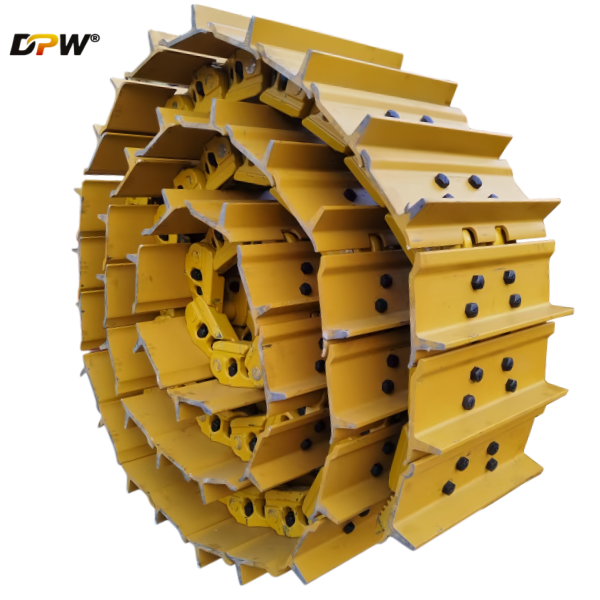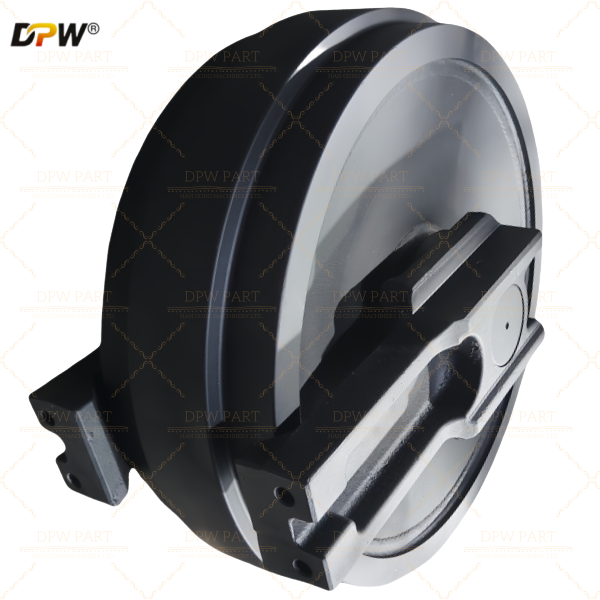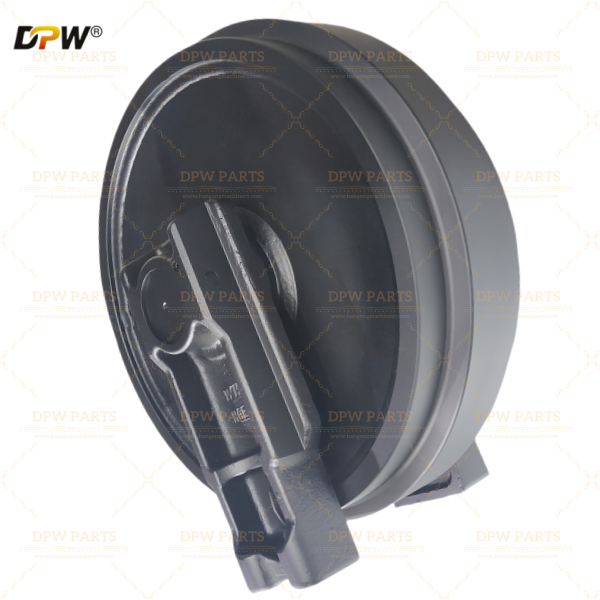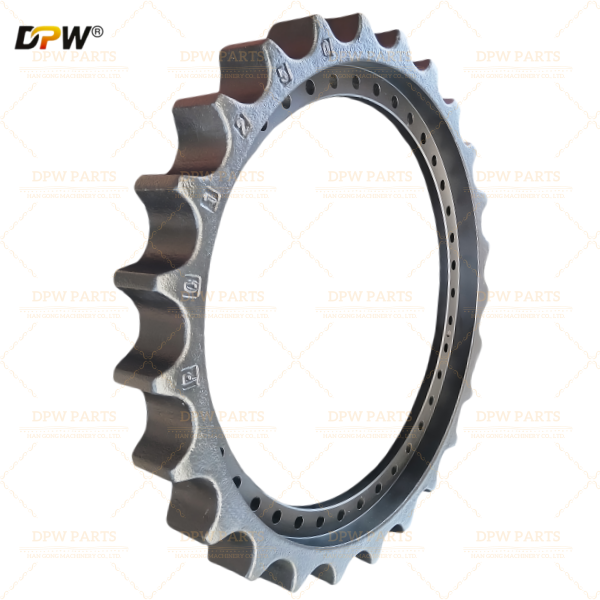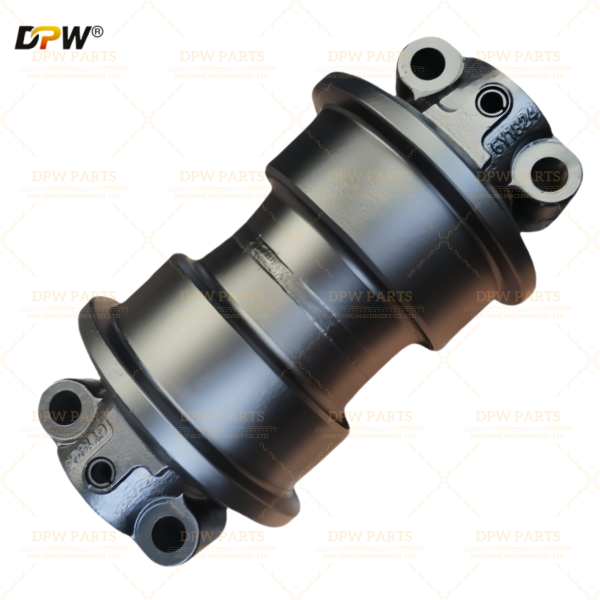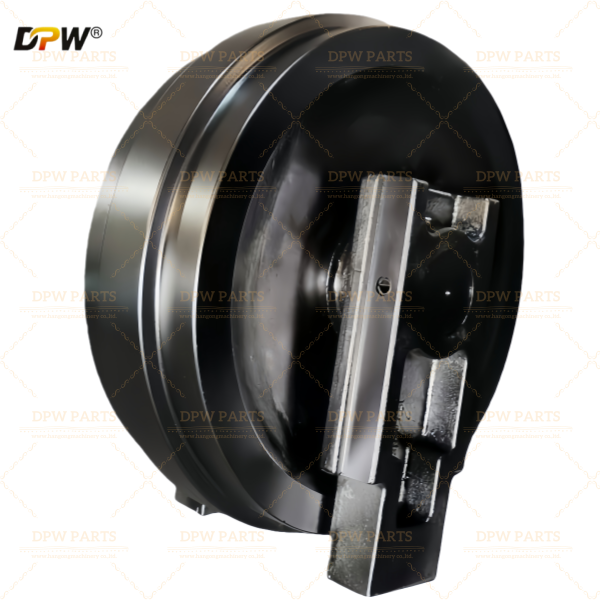

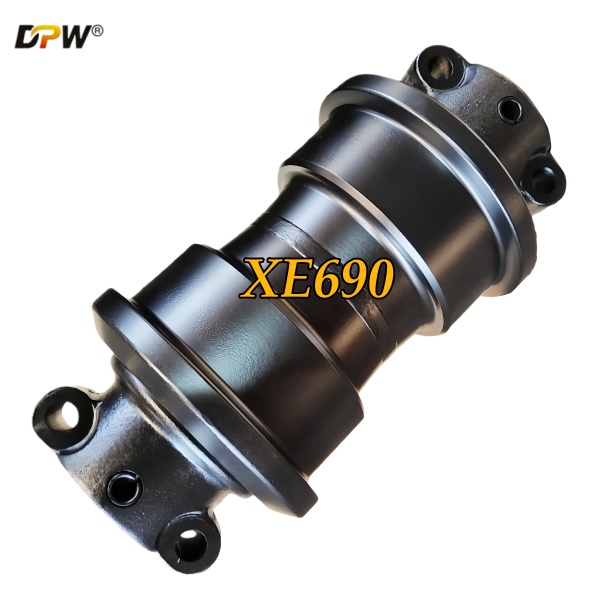
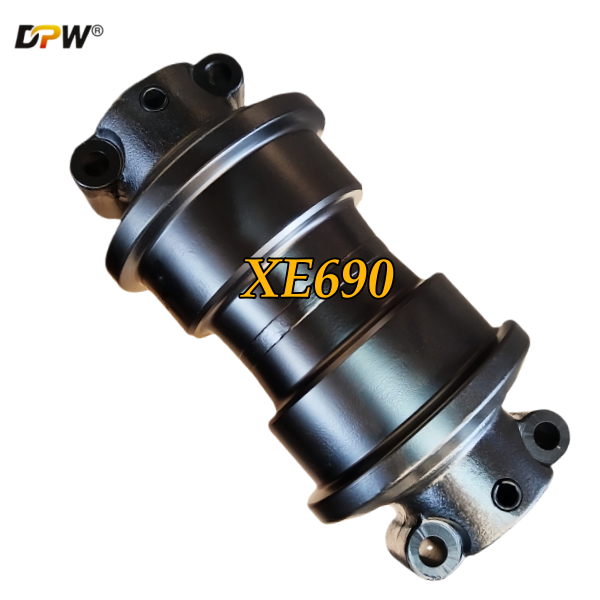
XCMG XE690 Track Lower Roller Assy/XCMG Undercarriage ODM manufacturer and supplier-DPW Machinery Parts/China factory
| ||||||||||||||||||||||||||

Product Specifications
Technical White Paper: XCMG XE690 Track Lower Roller Assembly - Engineering & Supply Profile by DPW Machinery Parts
Document ID: TP-UC-XE690-001 | Revision: 1.0 | Classification: Public
Executive Summary: A Performance-Optimized Undercarriage Solution
This document provides a comprehensive technical and commercial overview of the Track Lower Roller Assembly for the XCMG XE690 heavy-duty crawler excavator, engineered and manufactured by DPW Machinery Parts as a premier Original Design Manufacturer (ODM). This assembly is a critical load-bearing component within the undercarriage system, directly influencing machine stability, mobility, and total operating cost. DPW Machinery Parts delivers not just a replacement part, but a reliability-enhanced subsystem built through vertical manufacturing integration, advanced metallurgy, and rigorous application-specific validation. This white paper details the technical specifications, engineering philosophy, and supply chain value proposition that distinguish this component in the global aftermarket.
1. Product Definition & System Integration
1.1 Functional Role in the XCMG XE690 Undercarriage
The Track Lower Roller (also termed Bottom Roller or Support Roller) is a pivotal element of the crawler track system. Positioned on the lower strand of the track chain, its primary functions are:
Static & Dynamic Load Bearing: Supports a significant portion of the machine's operational weight (for the XE690, exceeding 65 metric tons), transmitting ground reaction forces to the mainframe.
Track Guidance and Alignment: Its flanged design confines the track chain, preventing lateral derailment during turning and side-slope operation.
Friction & Wear Management: Facilitates smooth rolling of the track, reducing frictional resistance and protecting the more expensive track links and chains from accelerated wear.
Failure of this component leads directly to increased fuel consumption, abnormal track wear, potential damage to the track frame, and unplanned machine downtime.
1.2 ODM Manufacturing Philosophy of DPW Machinery Parts
As an ODM partner, DPW Machinery Parts engages in a collaborative and proactive engineering process. This involves:
Design Authority: Utilizing proprietary engineering designs that meet or exceed OEM performance specifications, rather than simple reverse engineering.
Application-Driven Development: Designs are optimized based on the most common and severe duty cycles of the XE690, typically found in mining, quarrying, and major earthworks.
Full Process Control: Managing the entire value chain from material sourcing and forging to precision machining, heat treatment, assembly, and testing.
2. Technical Specifications & Engineering Analysis
The DPW Machinery Parts assembly for the XE690 is engineered for maximum service life under abrasive and high-impact conditions.
2.1 Core Component Specifications & Material Science
| Component | Material & Specification | Engineering Rationale & Advantage |
|---|---|---|
| Roller Wheel | Forged 55Mn or 60Mn High-Carbon Manganese Steel. | Provides an outstanding balance of high surface hardness (for wear resistance) and core toughness (for impact absorption). Superior to lower-grade carbon steels. |
| Heat Treatment | Computer-Controlled Induction Quenching & Tempering. Surface hardness: 58-62 HRC. Effective case depth: ≥ 10 mm. Core hardness: 38-42 HRC. | Deep, uniform hardening ensures the wear-resistant surface layer persists through long service life. The tough core prevents cracking and plastic deformation under extreme loads. |
| Shaft | Alloy Steel (40Cr or equivalent), precision ground and chrome-plated. | High tensile strength to resist bending. Chrome plating on sealing surfaces dramatically reduces friction and wear against the seal lips, extending seal life. |
| Bushing/Bearing | High-Density, Oil-Impregnated Sintered Bronze or Standardized Tapered Roller Bearing configuration (model-dependent). | Sintered bronze offers self-lubrication and excellent conformability. Tapered roller bearings provide high radial load capacity and are user-serviceable. |
| Sealing System | Multi-Stage Labyrinth with Integrated Double-Lip Radial Seal (NBR/Viton®) and Floating Metal Wear Ring. | Industry-leading contamination exclusion. The labyrinth deflects large debris, the wear ring protects the seal from abrasion, and the double-lip seal blocks fine silt and water. |
| Lubrication | Pre-filled with Lithium Complex EP Grease (ISO VG 1500+). | High-viscosity, extreme-pressure grease maintains a protective film under heavy load and high temperature, minimizing metal-to-metal contact. |
2.2 Dimensional Integrity & Interchangeability
The assembly is manufactured to CNC-machined tolerances within ISO 2768-mK standards.
All critical interfaces (shaft diameter, bolt hole pattern, overall width, and flange profile) are held to precise specifications to guarantee direct, drop-in replacement for the OEM XE690 part without modification or adjustment.
3. Manufacturing Excellence & Quality Assurance
DPW Machinery Parts' factory operates a closed-loop manufacturing process, ensuring traceability and consistency.
3.1 Production Workflow:
Material Forging: Raw alloy steel is die-forged to create a uniform grain structure for strength.
Rough Machining: Initial shaping on CNC lathes and milling centers.
Heat Treatment: Automated induction hardening and tempering furnaces with precise temperature profiling.
Finish Machining: Precision grinding of races, turning of sealing surfaces, and drilling of bolt holes.
Surface Treatment: Shot peening for stress relief and application of a high-bond primer and paint.
Clean-Room Assembly: Components are assembled in a controlled environment. Seals are installed with dedicated tools, and the unit is grease-purged.
Final Testing: 100% dimensional inspection, rotational torque check, and seal leak testing under pressure.
3.2 Quality Certifications & Standards:
ISO 9001:2015 certified quality management system.
Material certificates comply with EN 10204 3.1.
Performance benchmarks align with ISO 7452 (Test method for track rollers) and other relevant international undercarriage component standards.
4. Comparative Advantage & Total Cost of Ownership (TCO)
Choosing the DPW Machinery Parts ODM assembly offers a compelling TCO advantage over generic alternatives and competitive with OEM parts.
| Factor | Generic Aftermarket Part | OEM Part | DPW Machinery Parts (ODM) Assembly |
|---|---|---|---|
| Core Design | Copy; may have undisclosed compromises. | Original specification. | Enhanced specification targeting known failure modes. |
| Material Quality | Variable; often lower-grade steel. | Consistent, to specification. | Premium-grade forged alloy steel with verified chemistry. |
| Heat Treatment | Often superficial or inconsistent. | Controlled. | Deep, computerized induction hardening for optimal case depth. |
| Sealing System | Basic single-lip seal. | Standard OEM seal. | Advanced multi-stage seal for extreme environments. |
| Primary Value | Lowest upfront cost. | Brand assurance, reliability. | Highest longevity & reliability per dollar; optimal TCO. |
| Expected Outcome | Higher risk of premature failure, increased downtime. | Predictable service life. | Extended service intervals, reduced unplanned downtime. |
5. Application Guidance, Sourcing & Global Logistics
Primary Application: XCMG XE690 Crawler Excavator (Confirm compatibility with specific serial number ranges).
Installation: Follow OEM-recommended procedures. Clean the mounting boss, apply thread-locker to bolts, and torque in a cross pattern to the specified value.
Maintenance: While sealed for life, include rollers in routine undercarriage inspections for irregular wear, fluid leakage, or rotation resistance.
Sourcing via DPW Machinery Parts: As a factory-direct supplier and ODM, DPW provides:
Technical Data Sheets (TDS) and Material Safety Data Sheets (MSDS).
Customized Logistics Solutions (FOB, CIF, DAP terms).
After-Sales Support and field failure analysis.
Sustainability: The extended service life and rebuildable design (for certain configurations) contribute to reduced waste and a lower environmental footprint over the machine's lifecycle.